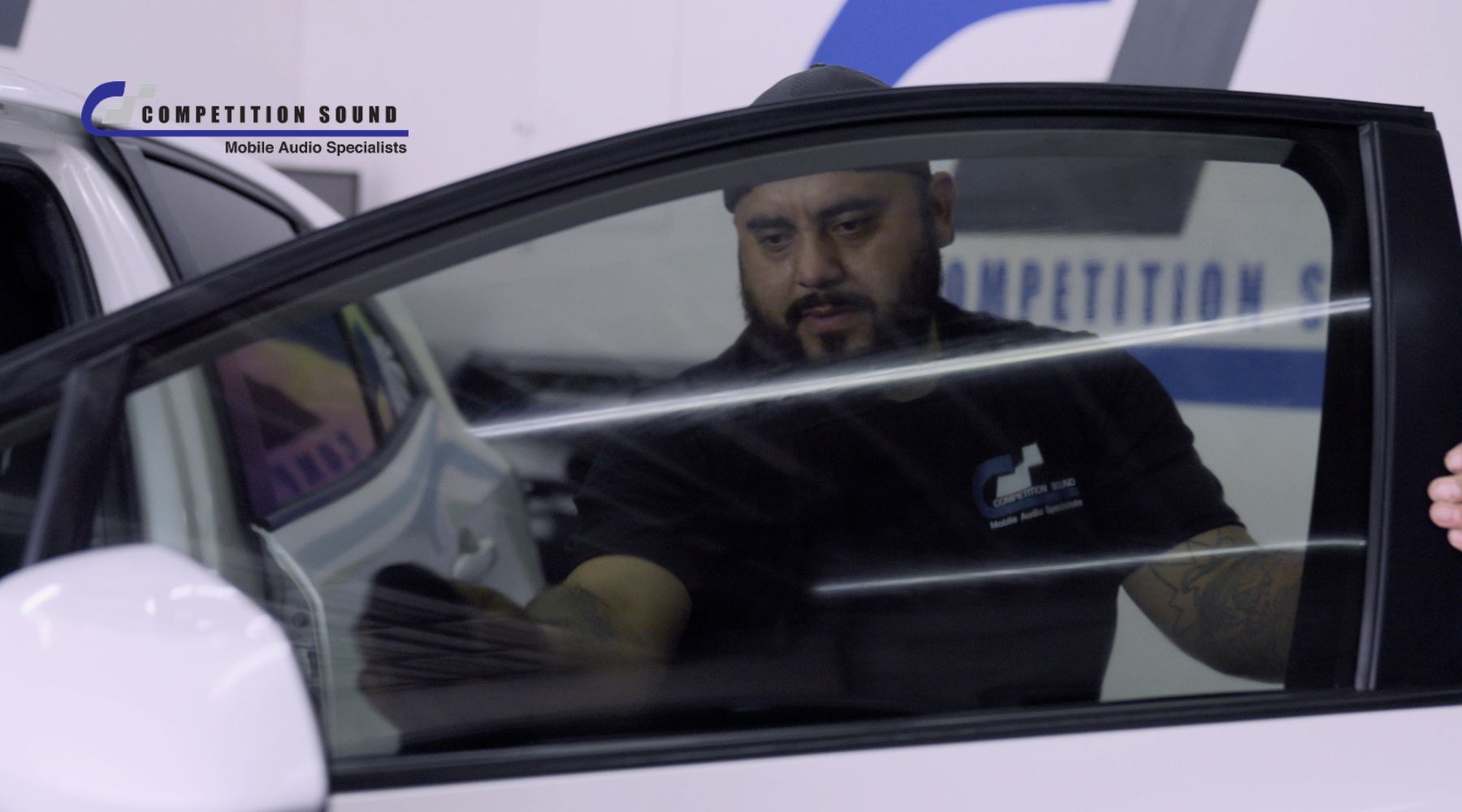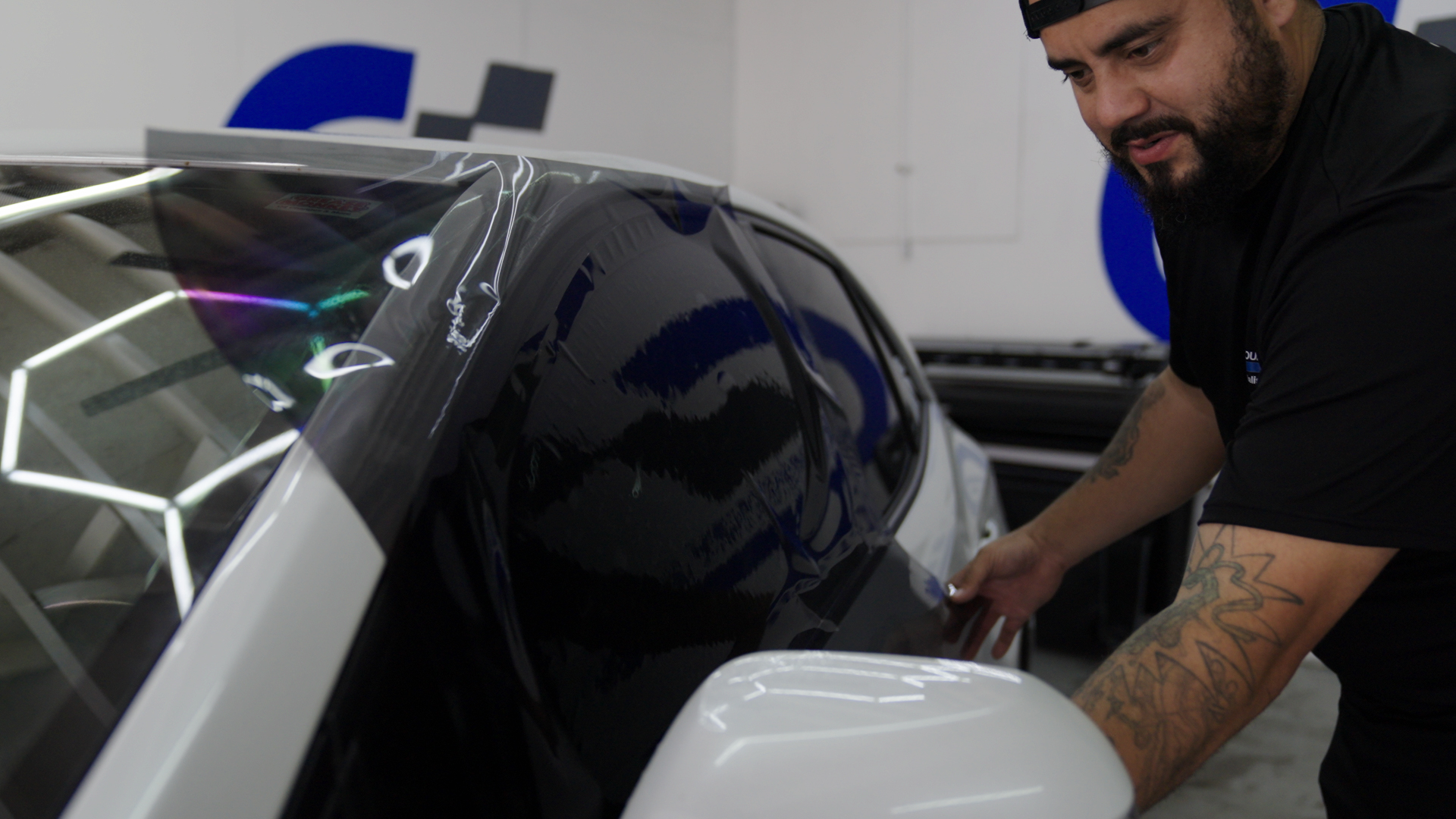
Ceramic window tint is an automotive film that uses microscopic ceramic materials in a non-metalized construction to manage solar energy. It can reduce a documented share of infrared and total solar energy, block more than 99% of ultraviolet radiation in some products, control glare, and maintain signal compatibility.
It works by changing how much solar energy the glass-and-film system transmits, reflects, and absorbs—not by making a vehicle immune to heat. Two ceramic films can look equally dark while delivering different levels of heat rejection, infrared control, clarity, and overall solar performance, so drivers should compare the specific film series and shade rather than relying on the ceramic label alone.
Ceramic window tint is often treated like a single performance level, but “ceramic” actually describes a type of film construction. Two ceramic films can look equally dark while delivering different levels of heat rejection, infrared control, clarity, and overall solar performance. That is why drivers should compare the specific film series and shade – not the ceramic label alone.
Competition Sound offers Solar Gard VortexIR and XenithIR as two ceramic window tint options. Both use signal-friendly ceramic construction, but Solar Gard’s published specifications show meaningful differences between the two series at comparable visible shades.
What Makes Window Tint "Ceramic"?
Automotive tint is a thin film system installed on the inside surface of vehicle glass. Depending on the product, that system can include polyester layers, an adhesive, color or optical-control layers, and a protective top coat. Ceramic film adds extremely small ceramic particles to one or more functional layers. The exact formulation and layer design are product-specific and usually proprietary.
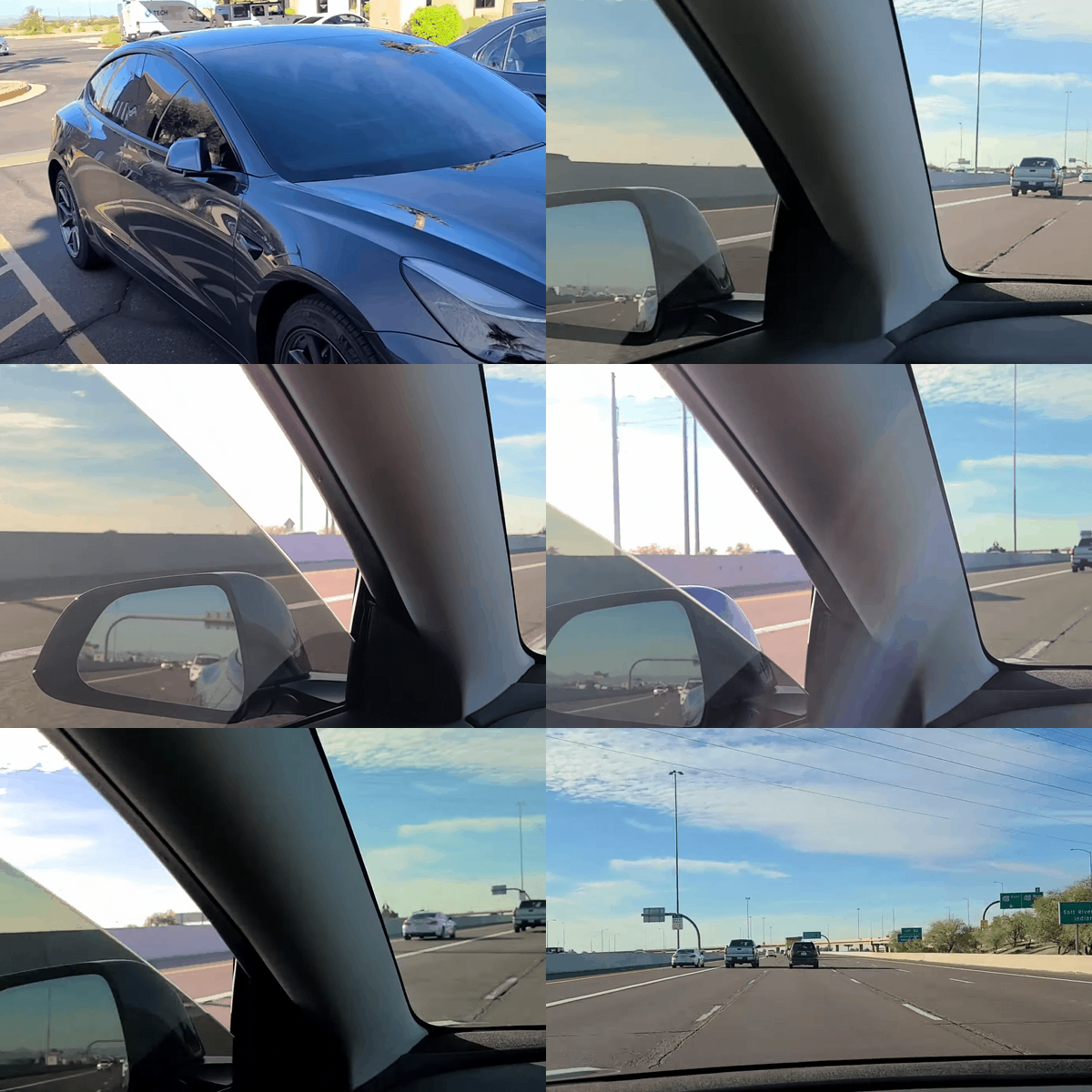
Those particles do not look like grit or a painted coating. They are engineered at a microscopic scale so the film can remain optically clear while changing how it interacts with sunlight. Solar Gard describes VortexIR as using ceramic nanoparticles and XenithIR as using next-generation ceramic technology.
Ceramic Tint Is Not the Same as Ceramic Coating
Ceramic window tint is a bonded film applied to glass. Ceramic coating is a liquid surface treatment commonly used on paint, wheels, glass, or trim. A coating may change water behavior, gloss, or surface maintenance, but it is not a substitute for an automotive window film and does not provide the same VLT, TSER, glare, or tint-shade functions.
Get professional window tint recommendations based on your vehicle, preferred shade, comfort goals, and South Texas driving conditions. Competition Sound can help you compare tint options before you schedule.
Product availability and installation options may vary by vehicle.
How Does Ceramic Window Tint Work?
Sunlight reaching a vehicle includes ultraviolet radiation, visible light, and infrared energy. When that energy meets glass and film, some passes through, some is reflected, and some is absorbed. Ceramic film is engineered to change that balance. Its ceramic materials help absorb and control portions of infrared and other solar energy while allowing a selected amount of visible light to pass through.
Ceramic tint does not make heat disappear. Some energy is absorbed by the glass and film and released over time, while heat can still enter through untreated glass, the roof, body panels, open doors, ventilation, and warm interior surfaces. Reliable product data therefore reports how much solar energy is rejected instead of promising a heat-proof cabin.
How to Read Window Tint Performance Numbers
How to Read Ceramic Tint Performance Numbers
Ceramic tint data sheets can show several percentages, and each one answers a different question. Choosing a film based on one large infrared-rejection number can be misleading because manufacturers may use different wavelength ranges, meters, or calculations.
| Metric | What It Means | Best Use |
|---|---|---|
| VLT | Visible light transmittance: the share of visible light that passes through. Lower values generally look darker. | Appearance, privacy, visibility, and legal fit |
| TSER | Total solar energy rejected by the tested glass-and-film system. | Broad overall solar-performance comparison |
| SIRR | Solar Gard's selective infrared rejection measurement across its stated infrared range. | Product-specific infrared comparison using the same method |
| IRER | Infrared energy reflected and absorbed, then released outward, under the stated calculation. | Broader infrared comparison using the same method |
| UV blocked | Ultraviolet radiation blocked within the manufacturer's stated range. | UV exposure and interior-material protection |
Swipe left or right to view the full table on smaller screens.
VLT Describes Darkness, Not the Whole Heat Story
A lower VLT normally looks darker, but the final installed VLT depends on both the film and the vehicle’s factory glass. Solar Gard therefore publishes film VLT and a representative “on auto glass” VLT. For help comparing shades and understanding legal considerations, see Competition Sound’s complete automotive window tint guide for Corpus Christi.
TSER Is the Broadest Single Solar-Performance Number
TSER measures total solar energy rather than one narrow portion of the spectrum. It is usually the most useful single number for comparing overall solar performance when the glass, test method, and conditions are comparable. Read it alongside VLT, reflectance, and manufacturer notes because factory glass varies.
Infrared Percentages Need Their Test Method
Infrared percentages can be useful, but manufacturers do not always measure them the same way. Solar Gard reports SIRR and IRER separately. A 93% SIRR figure is not the same as rejecting 93% of total solar energy, so compare infrared numbers only when the same testing method is being used.
Does Ceramic Tint Have to Be Dark?
No. Ceramic construction is available in dark, medium, and high-VLT shades. Visible darkness and solar performance are related through the product design, but they are not the same decision. A lighter film can still provide meaningful solar and infrared performance.
For example, Solar Gard lists VortexIR 70 at 71% film VLT with 40% TSER, while XenithIR 70 is listed at 67% film VLT with 50% TSER. These manufacturer test values show that a lighter appearance can still deliver measurable solar control. The final installed VLT depends on the vehicle’s original glass, so shade selection should be made for the specific vehicle and window.
VortexIR vs. XenithIR: Practical Solar Gard Examples
Competition Sound’s window tint page lists VortexIR as its S-4 nano-ceramic option and XenithIR as its S-5 advanced ceramic option. Both are rich-black, signal-friendly films offered in multiple shades. Solar Gard positions XenithIR as the higher-performing series, while VortexIR provides strong ceramic performance across a broad shade range.
| Manufacturer Summary | VortexIR | XenithIR |
|---|---|---|
| Ceramic positioning | Advanced ceramic nanoparticle technology | Next-generation ceramic technology |
| Maximum TSER listed | Up to 63% | Up to 64% |
| Maximum SIRR listed | Up to 88% | Up to 93% |
| UV light blocked | More than 99% | More than 99% |
| Signal compatibility | Signal-friendly construction | Signal-friendly construction |
| Manufacturer warranty listing | Limited lifetime transferable; certificate details apply | Limited lifetime transferable; certificate details apply |
Swipe left or right to view the full table on smaller screens.
Why Two Similar-Looking Shades Can Perform Differently
VortexIR 35 and XenithIR 35 provide a clear comparison. Both list 38% film VLT and 32% VLT on the representative automotive glass used in Solar Gard’s table, yet their solar-performance measurements differ.
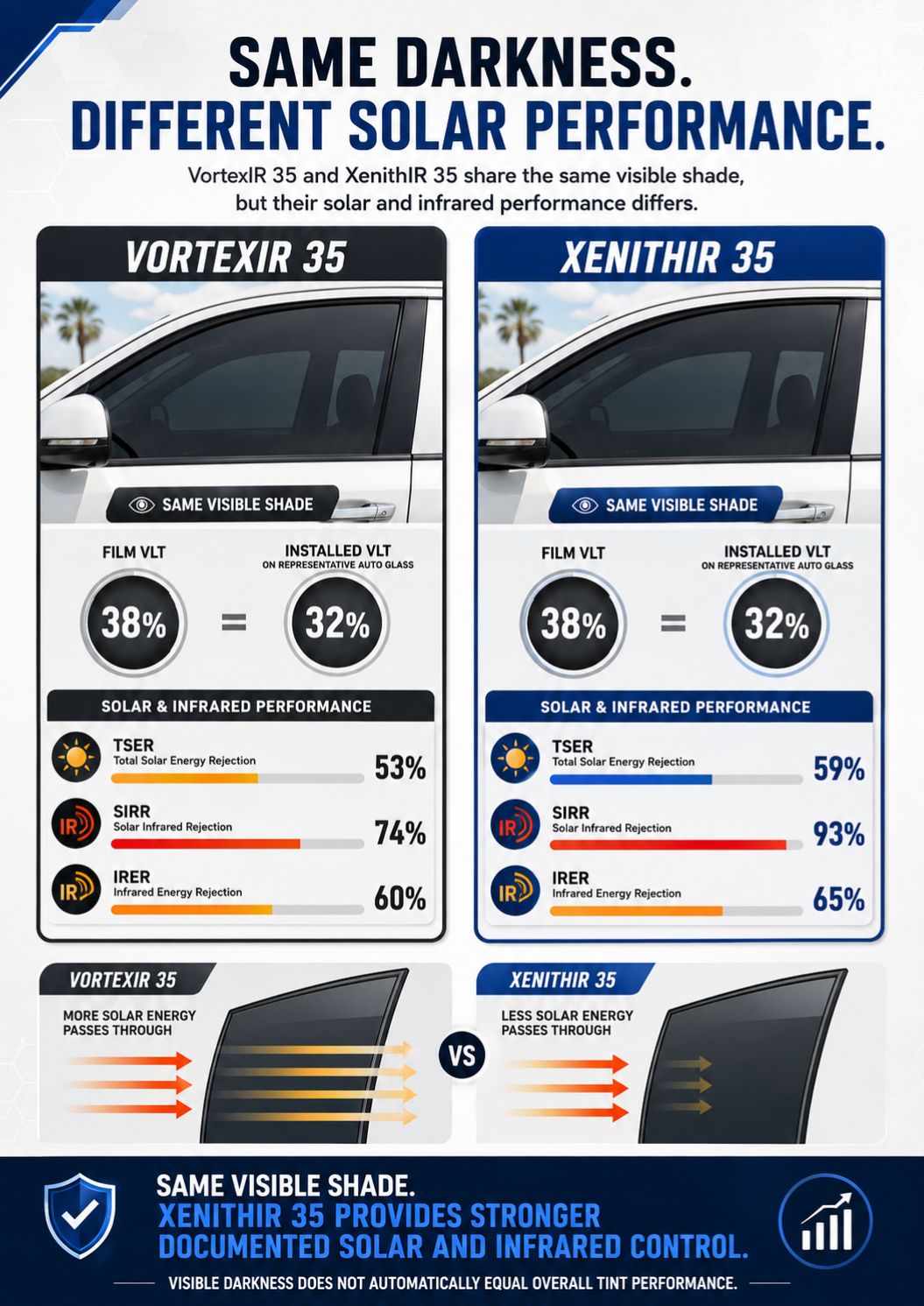
| Metric | VortexIR 35 | XenithIR 35 |
|---|---|---|
| Film VLT | 38% | 38% |
| VLT on representative auto glass | 32% | 32% |
| TSER | 53% | 59% |
| SIRR | 74% | 93% |
| IRER | 60% | 65% |
Swipe left or right to view the full table on smaller screens.
These values are useful for comparing the two series, but actual results can vary with the vehicle’s glass and manufacturing tolerances. Treat them as product-comparison data rather than a prediction of the finished result on every vehicle.
Drivers can review Competition Sound’s ceramic window tint options in Corpus Christi and ask which VortexIR or XenithIR shades are available for their vehicle.
Ceramic Tint vs. Dyed and Metal-Hybrid Tint
“Regular tint” is not one technical category. Dyed, non-metal color-stable, metalized, metal-hybrid, multilayer optical, and ceramic films can all fall under the broad window-tint label. Compare the specific product, its published data, and the quality of the installation rather than relying on a category stereotype.
| Film Category | Common Strength | Tradeoff or Question to Verify |
|---|---|---|
| Dyed or basic non-metal | Often selected for appearance, privacy, and a lower entry price. | Verify color stability, optical quality, TSER, UV data, and written warranty. |
| Metalized or metal-hybrid | Can provide strong solar performance and durable color in some products. | Check reflectance, finished appearance, and vehicle-specific signal compatibility. |
| Ceramic | Non-metal construction, strong product-specific solar and infrared data, low-reflective appearance, and signal-friendly positioning are common. | Ceramic films are not equal. Compare the exact series, shade, metrics, warranty, installation, and quote. |
Swipe left or right to view the full table on smaller screens.
What Ceramic Tint Does Not Automatically Guarantee
- Equal performance across every ceramic film. The ceramic label does not standardize TSER, infrared control, optical quality, color, adhesive, or warranty.
- Better heat rejection simply because a shade is darker. Darkness and solar performance must be compared separately.
- A heat-proof vehicle. Tint reduces part of the solar load but cannot stop every path by which heat enters.
- Automatic legal compliance. Requirements depend on the finished glass-and-film combination and the window position.
- Protection from every type of damage. Film can still be scratched, contaminated, damaged, or installed poorly.
- Identical signal compatibility across every product. Check the manufacturer documentation for the film being installed.
- Unlimited lifetime warranty coverage. The applicable certificate, registration requirements, exclusions, and remedies determine coverage.
How to Compare Ceramic Tint Before Installation
- Ask for the manufacturer, product series, and shade, not only a package name such as ceramic or premium.
- Review the film VLT and the expected installed result on the vehicle's factory glass.
- Compare TSER for overall solar performance using the same test method.
- Identify the infrared metric by name. SIRR, IRER, and single-wavelength readings are not interchangeable.
- Evaluate visible reflectance, color, haze, clarity, and how the glass looks from inside and outside.
- Confirm the written manufacturer warranty and the installer's process for documentation, claims, product replacement, and labor coverage.
- Discuss how tint requirements apply to each window, nighttime visibility, available stock, installation details, aftercare, and the complete installed quote.
What Ceramic Tint Means for Corpus Christi Drivers
Corpus Christi drivers regularly deal with strong sun, outdoor parking, open roads, and glare from bright pavement, nearby vehicles, and coastal surroundings. That makes solar performance and comfortable visibility practical concerns, but it does not make one film or shade right for every vehicle.
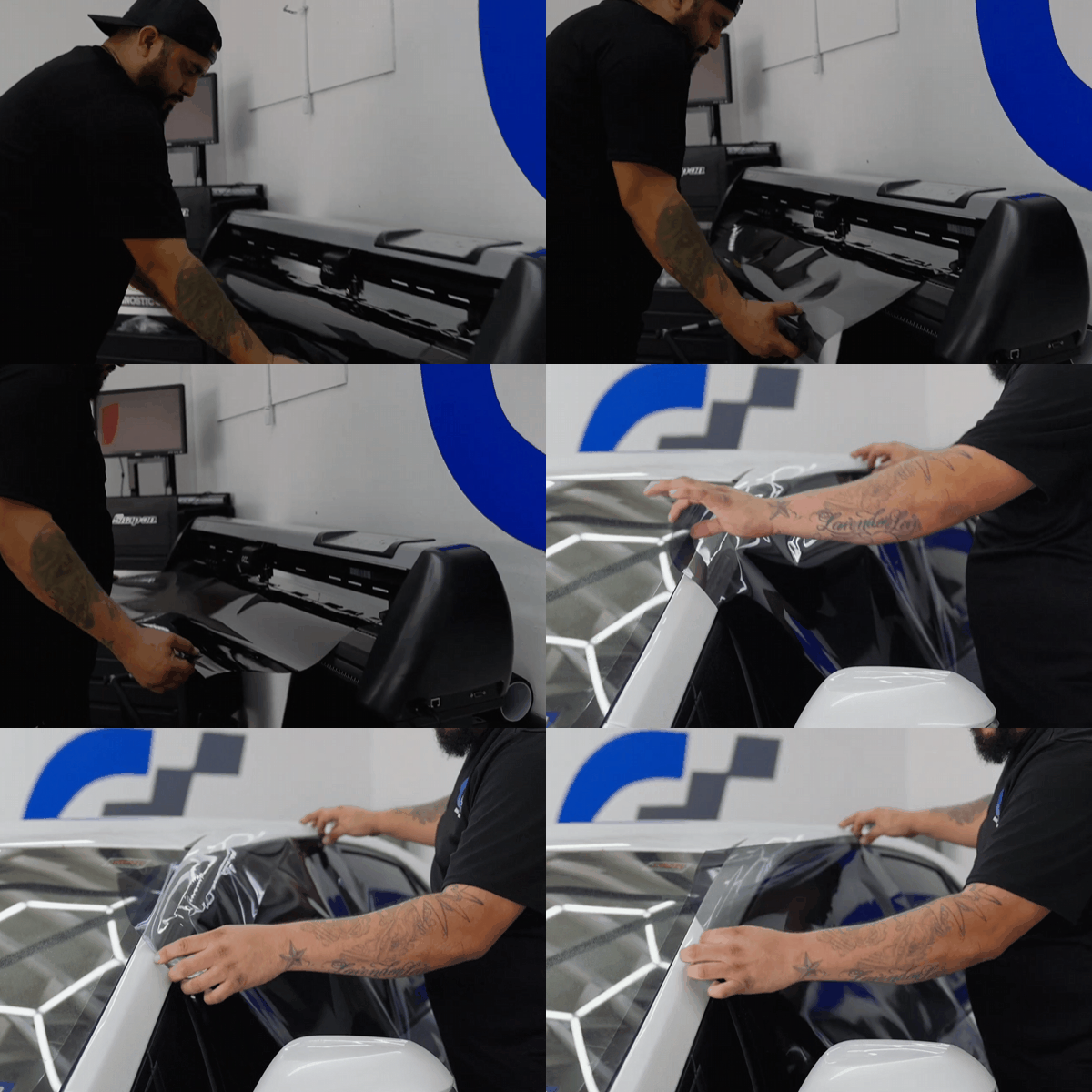
A vehicle with dark factory privacy glass may need a different approach from a sedan with clear side glass. A driver who spends more time after dark may choose a different VLT from someone focused mainly on daytime privacy. Ceramic technology gives the installer more flexibility to balance appearance, visibility, signal compatibility, and documented solar performance.
Compare Ceramic Tint for Your Vehicle
Ceramic window tint uses microscopic ceramic materials in a non-metalized film construction to help manage solar energy without requiring an extremely dark appearance. The ceramic label alone, however, does not tell you how well a film will perform.
Competition Sound offers Solar Gard VortexIR and XenithIR for Corpus Christi drivers. Review the available window tint options, request a vehicle-specific quote, or call (361) 561-0002 to compare appearance, visibility, heat rejection, warranty coverage, and installed pricing for your vehicle.
Get a Vehicle-Specific Tint Recommendation in Corpus Christi
Ceramic window tint uses microscopic ceramic materials in a non-metalized film construction to help manage solar energy without requiring an extremely dark appearance. The ceramic label alone, however, does not tell you how well a film will perform.
Competition Sound offers Solar Gard VortexIR and XenithIR for Corpus Christi drivers. Review the available window tint options, request a vehicle-specific quote, or call (361) 561-0002 to compare appearance, visibility, heat rejection, warranty coverage, and installed pricing for your vehicle.
Get professional window tint recommendations based on your vehicle, preferred shade, comfort goals, and South Texas driving conditions. Competition Sound can help you compare tint options before you schedule.
Product availability and installation options may vary by vehicle.
Frequently Asked Questions
Is ceramic tint the same as ceramic coating?
No. Ceramic tint is a thin film bonded to vehicle glass. Ceramic coating is a liquid surface treatment. The products, installation methods, and performance measurements are different.
Does ceramic window tint go on the inside or outside?
Professional automotive tint is normally installed on the interior side of the vehicle glass. The installer cleans and prepares the glass, shapes the film for the window, applies it with the proper solution, and finishes the edges and moisture removal according to the film system and vehicle.
Can ceramic tint be nearly clear?
Yes. Some ceramic series include high-VLT shades that keep a lighter appearance while providing documented solar and UV performance. Availability and the final installed VLT should be checked for the specific vehicle and window.
Does ceramic tint block all heat?
No. Ceramic film can reject a documented share of total solar and infrared energy, but it cannot stop all solar energy or every other way heat enters and builds inside a vehicle.
How long does ceramic window tint last?
There is no universal lifespan for every ceramic film. Product quality, installation, factory glass, sun exposure, cleaning, and physical damage all matter. Solar Gard lists limited lifetime automotive warranties for VortexIR and XenithIR, subject to the applicable warranty certificate and activation requirements.
Is ceramic window tint legal in Texas?
Ceramic construction does not make a shade legal or illegal. Texas requirements depend on the window position and the completed glass-and-film system. Competition Sound can help compare suitable shades, but compliance should be confirmed for the specific vehicle and installation.
Competition Sound
Car stereo store in Corpus Christi, Texas
- Monday 9:00 AM–7:00 PM
- Tuesday 9:00 AM–7:00 PM
- Wednesday 9:00 AM–7:00 PM
- Thursday 9:00 AM–7:00 PM
- Friday 9:00 AM–7:00 PM
- Saturday 9:00 AM–7:00 PM
- Sunday 10:00 AM–6:00 PM